

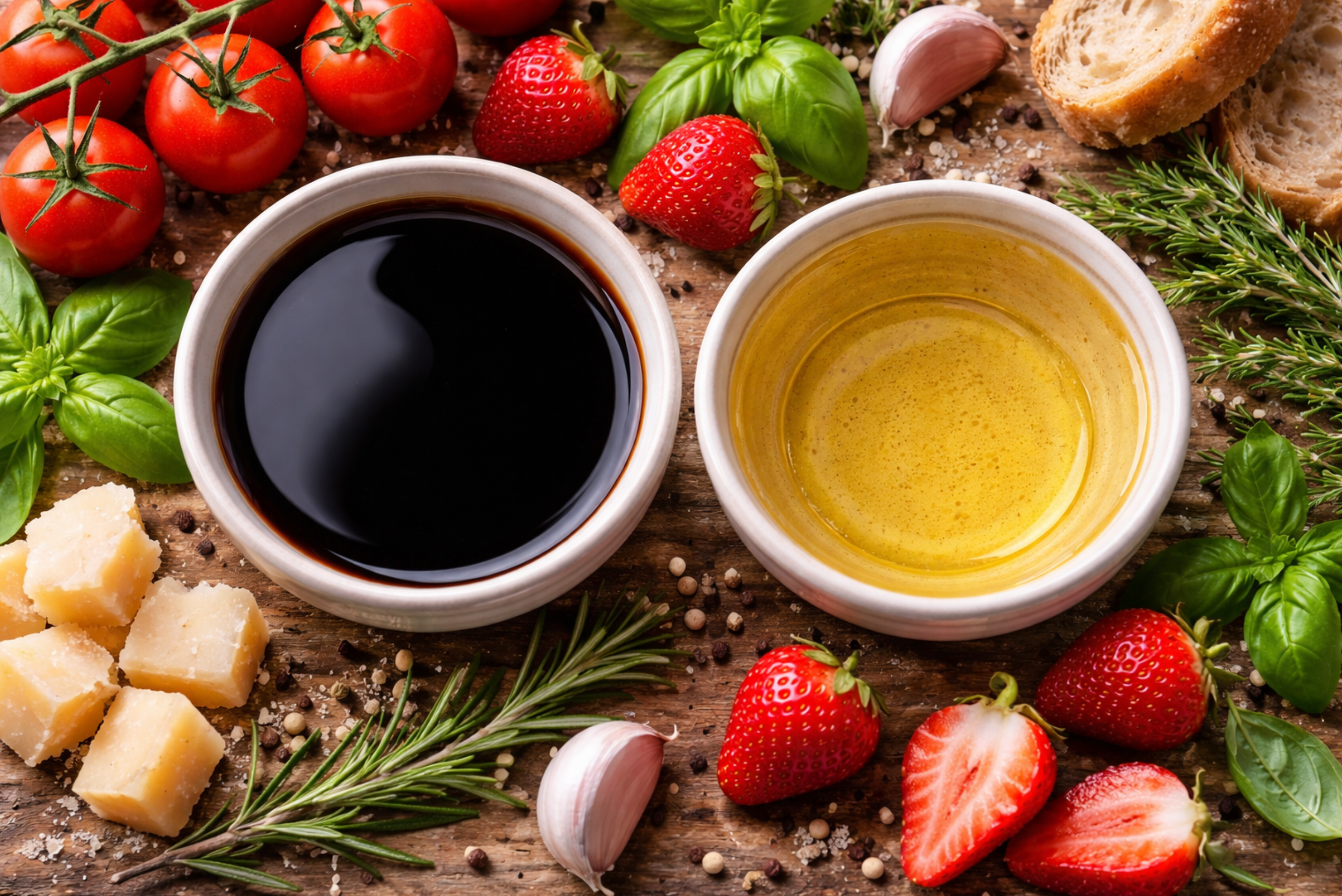
White vs Dark Balsamic Vinegar: What’s the Difference?
Learn the difference between white and dark balsamic vinegar, how each one is made, and the best ways to use both in everyday cooking.
Why the Difference Matters
Balsamic vinegar is one of the easiest ways to add depth, brightness, and balance to a meal. But not all balsamics are used the same way.
Dark balsamic vinegar brings richness, body, and deeper sweetness, making it ideal for roasted vegetables, grilled meats, reductions, and bold finishing drizzles.
White balsamic vinegar is lighter, brighter, and often fruitier, making it a beautiful choice for salads, seafood, chicken, fresh fruit, and dishes where you want balsamic flavor without darkening the final presentation.
How Balsamic Vinegar Is Made
Balsamic vinegar begins with grape must, the freshly pressed juice of grapes. The must is slowly cooked, concentrated, and aged to develop its balance of sweetness, acidity, and complexity.
As balsamic ages, it becomes deeper, smoother, and more layered. This aging process helps create the rich character that makes balsamic vinegar so valuable in both simple home cooking and more elevated dishes.
While production methods can vary, the goal is always the same: to create a vinegar that brings flavor, balance, and depth to food.
Dark Balsamic Vinegar
Flavor Profile
Dark balsamic vinegar is rich, bold, smooth, and slightly sweet with deeper notes that can remind you of cooked fruit, fig, molasses, caramel, or dried berries.
Best Uses
Dark balsamic works beautifully with roasted vegetables, grilled meats, pork, beef, chicken, mushrooms, cheese boards, reductions, and desserts.
When to Choose Dark Balsamic
Choose dark balsamic when you want a richer finish, deeper color, and a bolder flavor that can stand up to hearty ingredients.
White Balsamic Vinegar
Flavor Profile
White balsamic vinegar is lighter, crisper, and brighter than dark balsamic. It often has a clean, fruit-forward character with a softer sweetness and refreshing finish.
Best Uses
White balsamic is excellent with salads, seafood, chicken, fruit, vinaigrettes, sparkling drinks, light sauces, and summer dishes.
When to Choose White Balsamic
Choose white balsamic when you want brightness and flavor without adding dark color to the dish. It is especially useful for fresh, light, colorful recipes.
White vs Dark Balsamic: Quick Guide
Use dark balsamic for richer dishes, roasted vegetables, meats, mushrooms, glazes, reductions, and desserts.
Use white balsamic for salads, seafood, chicken, fruit, vinaigrettes, and lighter meals.
Dark balsamic adds deeper color and bold flavor.
White balsamic keeps dishes brighter and lighter in appearance.
Both styles can balance sweetness, acidity, and richness in everyday cooking.
Explore White and Dark Balsamic Flavors
Discover our collection of flavored balsamic vinegars and find the perfect bottle for salads, marinades, roasted vegetables, grilled meats, desserts, and everyday cooking.
Shop Balsamic Vinegars