

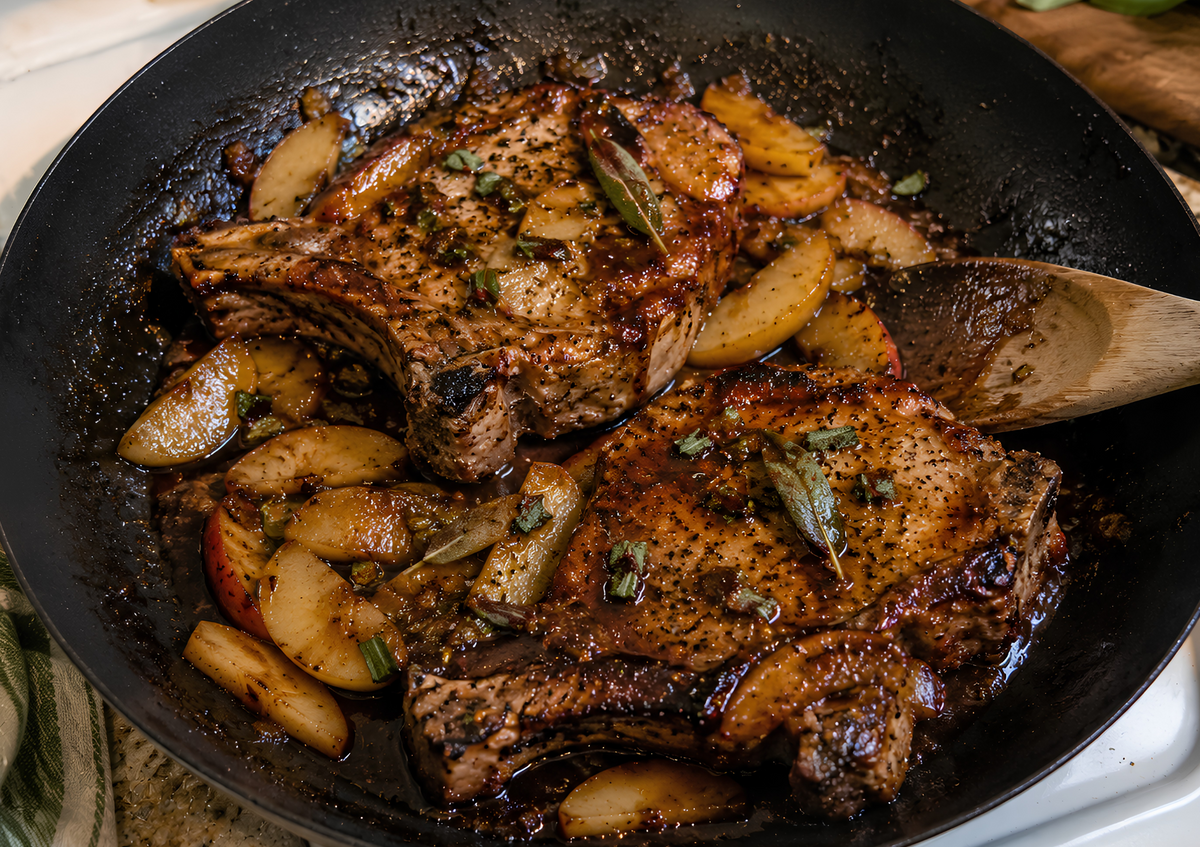
Fig Balsamic Pork Chops with Apples & Sage
Fig Balsamic Pork Chops with Apples & Sage
Description
Pan-seared pork chops are finished with caramelized apples, fresh sage, and a glossy Fig Dark Balsamic pan sauce built from the flavorful browned bits in the skillet. Savory herbs, Dijon, tender apples, and a fresh balsamic finish make this cozy fall dinner elegant enough for entertaining while still easy enough for a weeknight.
Recipe Overview
Servings: 4
Prep Time: 10 minutes
Cook Time: 20–25 minutes
Rest Time: 5 minutes
Total Time: 35–40 minutes
Ingredients
4 bone-in pork chops, about 1 inch thick
1 tablespoon Herb de Provence Olive Oil
2 firm apples, thinly sliced
1 tablespoon unsalted butter
1 small shallot, thinly sliced
1 clove garlic, minced
⅓ cup plus 2 teaspoons Fig Dark Balsamic, divided
¼ cup low-sodium chicken broth
1 teaspoon Dijon mustard
1 teaspoon fresh sage, finely chopped
½ teaspoon kosher salt
¼ teaspoon freshly ground black pepper
Optional: fresh thyme or rosemary, for finishing
Instructions
• Pat the pork chops thoroughly dry with paper towels and season both sides with kosher salt and freshly ground black pepper.
• Heat Herb de Provence Olive Oil in a large skillet over medium-high heat until shimmering.
• Add the pork chops and sear for about 3–4 minutes on the first side, without moving them unnecessarily, until deeply golden. Turn and sear the second side for about 3–4 minutes. At this stage, focus on developing a good crust rather than cooking the chops completely through.
• Transfer the partially cooked pork chops to a clean plate. They will finish cooking later in the pan sauce.
• Reduce the heat to medium. Add the butter and sliced apples to the skillet. Cook for 4–5 minutes, stirring occasionally, until the apples begin to soften and develop light caramelization while still holding their shape.
• Add the shallot and cook for 1–2 minutes, until softened. Stir in the garlic and cook for about 30 seconds, just until fragrant.
• In a small bowl, whisk together ⅓ cup Fig Dark Balsamic, chicken broth, Dijon mustard, and chopped sage.
• Pour the balsamic mixture into the skillet with the apples and scrape the bottom of the pan to release the browned bits left from searing the pork.
• Simmer for 3–4 minutes, stirring occasionally, until the sauce reduces slightly and becomes glossy but remains spoonable.
• Return the pork chops and any accumulated juices to the skillet. Spoon the apple-sage sauce over the chops and simmer gently until an instant-read thermometer inserted into the thickest part of each chop, away from the bone, registers 145°F. Use the stated cooking times only as a guide; actual timing will depend on chop thickness and skillet temperature.
• Transfer the pork chops to a clean serving platter and let them rest for 5 minutes.
• Spoon the warm apples and sage pan sauce over the rested pork chops.
• Finish each serving with ½ teaspoon Fig Dark Balsamic, using the remaining 2 teaspoons total, and a sprinkle of fresh thyme or rosemary, if desired.
Chef’s Tip
Use firm apples such as Honeycrisp, Pink Lady, or Granny Smith so they soften and caramelize without disappearing into the pan sauce. During the first pork sear, concentrate on developing a deep golden crust rather than chasing a particular internal temperature—the chops will finish gently in the sauce. Keep the Fig Dark Balsamic sauce glossy and spoonable; if it reduces too far, loosen it with a tablespoon or two of chicken broth.
Flavor Variations
• 25 Star Dark: Replace Fig Dark Balsamic with 25 Star Dark Balsamic for a smoother, more classic balsamic pan sauce with savory depth.
• Pomegranate: Replace Fig Dark Balsamic with Pomegranate Dark Balsamic for brighter fruit character and acidity that contrasts beautifully with the caramelized apples.
• Blackberry: Replace Fig Dark Balsamic with Blackberry Dark Balsamic for a deeper berry-forward sauce that works especially well with apples, pork, and sage.
• Garlic: Replace Herb de Provence Olive Oil with Garlic Infused Olive Oil for a more savory, garlic-forward version.
• Herb Finish: Add fresh rosemary or thyme at serving for an additional layer of savory herb flavor.
Pairings
Serve with garlic mashed potatoes, creamy polenta, wild rice, roasted Brussels sprouts, sautéed green beans, roasted carrots, or garlicky greens. Chardonnay, Pinot Noir, dry hard cider, or sparkling water with citrus all complement the fig, apple, sage, and savory pork.
Build Your Entrée
Turn these Fig Balsamic pork chops into a complete dinner
Start with the savory pork chops and apple-sage pan sauce, then add something creamy or earthy and a green vegetable to balance the rich Fig Dark Balsamic.
Finished Meal
Fig Balsamic Pork Chops with caramelized apples and sage, garlic mashed potatoes, roasted Brussels sprouts, and sautéed green beans
Protein
Bone-in pork chops pan-seared until deeply golden, then finished gently in the apple-sage Fig Balsamic sauce until they reach 145°F
Vegetables & Sides
Garlic mashed potatoes, creamy polenta, wild rice, roasted Brussels sprouts, sautéed green beans, roasted carrots, or garlicky greens
Flavor Pairing
Fig Dark Balsamic brings rich fruit and balanced acidity while Herb de Provence Olive Oil and fresh sage add savory herbal depth to the pork and apples
Recipe Notes
Bone-in pork chops work especially well here because the initial sear builds a deeply browned crust while the final gentle cook in the sauce brings the pork to its finished temperature. Do not continue searing simply to reach a predetermined temperature during the first stage; the final thermometer reading after the chops return to the sauce is what determines doneness.
Cook the pork until the thickest part reaches at least 145°F, checking away from the bone, then allow the chops to rest for at least 3 minutes before serving. This recipe uses a 5-minute rest.
Apple varieties behave differently in a skillet. Firm apples such as Honeycrisp, Pink Lady, and Granny Smith are good choices because they soften while retaining enough structure to remain distinct in the finished sauce.
If the pan sauce reduces too much, stir in a tablespoon or two of chicken broth to restore a glossy, spoonable consistency. If it seems too thin, reduce it briefly before returning the pork so the chops do not overcook while the sauce thickens.
The Fig Dark Balsamic is intentionally divided: ⅓ cup cooks into the pan sauce and melds with the fond, apples, Dijon, and sage, while the remaining 2 teaspoons are reserved for finishing the four servings with ½ teaspoon each.


