

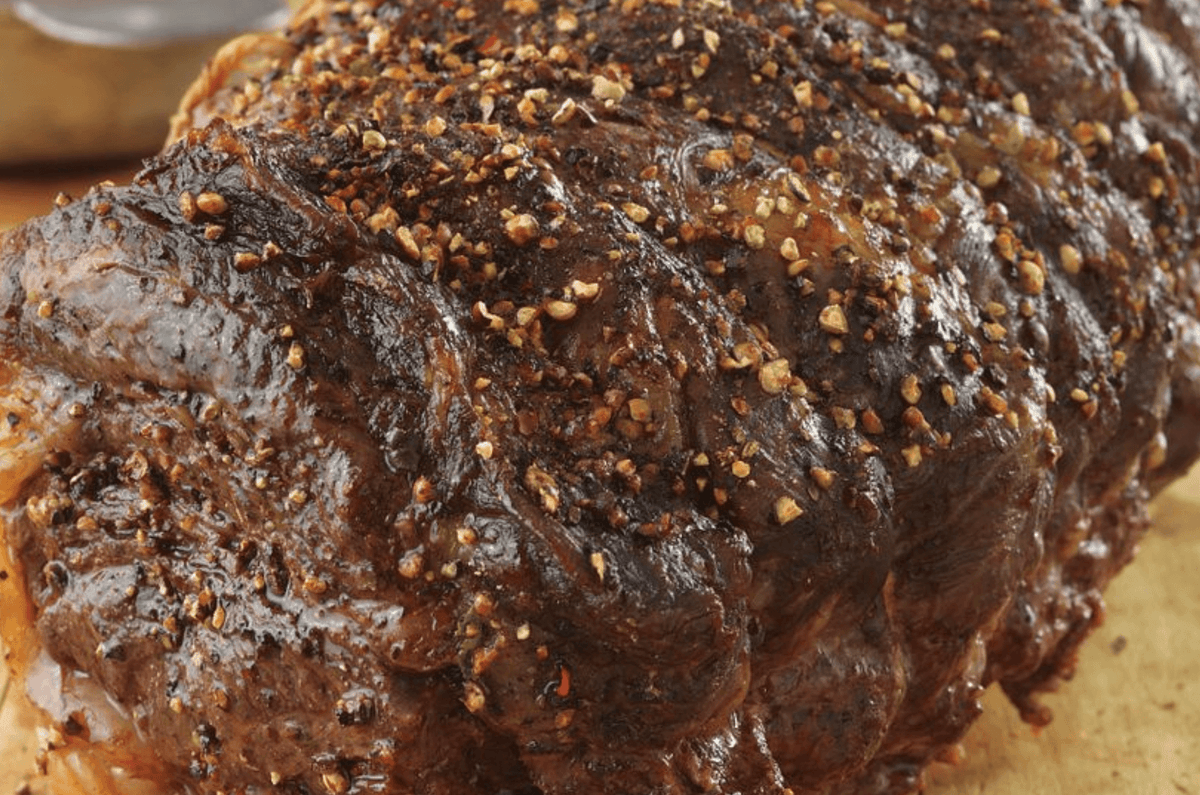
Garlic and Tri-Pepper-Crusted Beef Roast with Balsamic Sauce
Garlic & Tri-Pepper-Crusted Beef Roast with Balsamic Sauce
Description
A savory beef roast coated with Garlic Infused Olive Oil, fresh garlic, and cracked mixed peppercorns, then served with a rich beef pan sauce finished with 25 Star Dark Balsamic for bold flavor without an overly reduced or sweet glaze.
Recipe Overview
Servings: 8
Prep Time: 20 minutes
Cook Time: Approximately 1 hour 30 minutes–2 hours 15 minutes
Resting Time: 15–20 minutes
Total Time: Approximately 2 hours 5 minutes–2 hours 55 minutes
Ingredients
1 boneless beef chuck eye roast, 3–4 pounds, tied if needed for an even shape
1 tablespoon Garlic Infused Olive Oil
2 tablespoons coarsely crushed mixed peppercorns
4 cloves garlic, finely minced
½ teaspoon kosher salt
1 cup low-sodium beef broth, plus more if needed
⅓ cup 25 Star Dark Balsamic Vinegar, divided
2 tablespoons unsalted butter, softened and divided
1 tablespoon all-purpose flour
¼ teaspoon coarsely ground black pepper
Kosher salt, to taste
Instructions
• Preheat the oven to 350°F. Pat the roast thoroughly dry with paper towels. If the roast is unevenly shaped, tie it with kitchen twine so it cooks more evenly.
• Rub the roast all over with Garlic Infused Olive Oil.
• Combine the crushed mixed peppercorns, minced garlic, and ½ teaspoon kosher salt. Press the mixture evenly over the roast.
• Place the roast fat-side up on a rack in a shallow roasting pan. Insert an oven-safe thermometer into the thickest part of the roast, avoiding large seams of fat.
• Roast uncovered until the thickest part reaches at least 145°F. Begin checking well before the end of the estimated cooking window rather than relying on time alone; roast shape and thickness can substantially affect cooking time.
• Transfer the roast to a carving board, tent loosely with foil, and let rest for 15–20 minutes before slicing. Reserve the roasting-pan drippings for the sauce.
• While the roast rests, carefully spoon off excess surface fat from the pan drippings, leaving the flavorful juices behind. Add the drippings to a small saucepan with the beef broth and ¼ cup of the 25 Star Dark Balsamic.
• Bring to a gentle simmer over medium heat and cook for about 5–8 minutes, or until the sauce has reduced slightly and the beef and balsamic flavors are concentrated. Do not reduce it to a thick syrup.
• In a small bowl, mash 1 tablespoon softened butter with the flour until completely smooth. Reduce the saucepan heat to medium-low and gradually whisk the butter-flour mixture into the simmering sauce. Cook for 1–2 minutes, whisking, until the sauce lightly coats the back of a spoon.
• Remove the saucepan from the heat. Whisk in the remaining 1 tablespoon butter, the remaining 1 tablespoon plus 1 teaspoon 25 Star Dark Balsamic, and the coarsely ground black pepper. Taste before adding additional salt because the pan drippings and broth may already provide enough seasoning.
• If the sauce becomes thicker than desired, whisk in a small splash of additional beef broth. If it is too thin, return it briefly to low heat and simmer gently until it reaches the desired consistency.
• Remove the kitchen twine, if used. Slice the rested roast thinly across the grain and serve with the warm balsamic pan sauce spooned over or alongside the beef.
Chef’s Tip
For this roast, use temperature rather than the clock to determine doneness. Roast shape and thickness can change cooking time considerably. The balsamic sauce should taste like a savory beef pan sauce with a distinct 25 Star Dark Balsamic finish—not like a thick balsamic reduction—so reduce the broth and most of the balsamic only briefly and add the final balsamic off heat.
Flavor Variations
• Espresso: Replace the 25 Star Dark Balsamic with Espresso Dark Balsamic for roasted, coffee-like depth that complements the cracked peppercorn crust and beef pan sauce.
• Fig: Replace the 25 Star Dark Balsamic with Fig Dark Balsamic for a richer fruit-forward sauce. Keep the sauce savory and do not add additional sweetener.
• Rosemary Garlic: Replace 1 teaspoon of the Garlic Infused Olive Oil with 1 teaspoon Rosemary Infused Olive Oil and add 1 teaspoon finely chopped fresh rosemary to the peppercorn mixture for an herb-forward crust while keeping garlic as the dominant infused-oil flavor.
• Mushroom: Brown 8 ounces sliced cremini mushrooms separately, then spoon them over the sliced roast before adding the balsamic pan sauce. Browning them separately prevents their released moisture from diluting the sauce.
Pairings
Serve with creamy mashed potatoes, roasted root vegetables, green beans, sautéed mushrooms, Brussels sprouts, or a crisp wedge salad. The savory balsamic pan sauce is especially good with potatoes or roasted vegetables that can catch the extra sauce.
Build Your Plate
Build a complete dinner around this Garlic & Tri-Pepper-Crusted Beef Roast
The pepper-crusted roast and savory balsamic pan sauce pair naturally with creamy potatoes, deeply roasted vegetables, and simple green sides that balance the richness of the beef.
Finished Meal
Garlic & Tri-Pepper-Crusted Beef Roast with a savory 25 Star Dark Balsamic pan sauce
Protein
Thinly sliced peppercorn- and garlic-crusted beef roast served with warm balsamic pan sauce
Vegetables & Sides
Creamy mashed potatoes, roasted root vegetables, green beans, Brussels sprouts, sautéed mushrooms, or a crisp wedge salad
Flavor Pairing
Garlic Infused Olive Oil builds the savory crust while 25 Star Dark Balsamic gives the pan sauce its signature depth; Espresso or Fig Dark Balsamic create richer variations
Recipe Notes
USDA recommends cooking whole beef roasts to a minimum internal temperature of 145°F as measured with a food thermometer before removing the meat from the heat, followed by at least a 3-minute rest. This recipe uses a longer 15–20 minute rest to allow the roast juices to redistribute before thin slicing.
Chuck eye roasts can vary considerably in shape, thickness, marbling, and tenderness. Treat the stated roasting time as a planning range and rely on the internal temperature of the thickest portion rather than the clock.
Slice the roast thinly across the grain. Because the direction of the grain can change across a chuck roast, look closely at the exposed meat and adjust the direction of your knife as needed.
Use low-sodium beef broth so you can control the final seasoning after the pan drippings have been incorporated. Taste the finished sauce before adding salt.
Leftover beef should be refrigerated promptly in a covered container. Store the sauce separately when practical and reheat it gently so it does not become overly reduced.


