

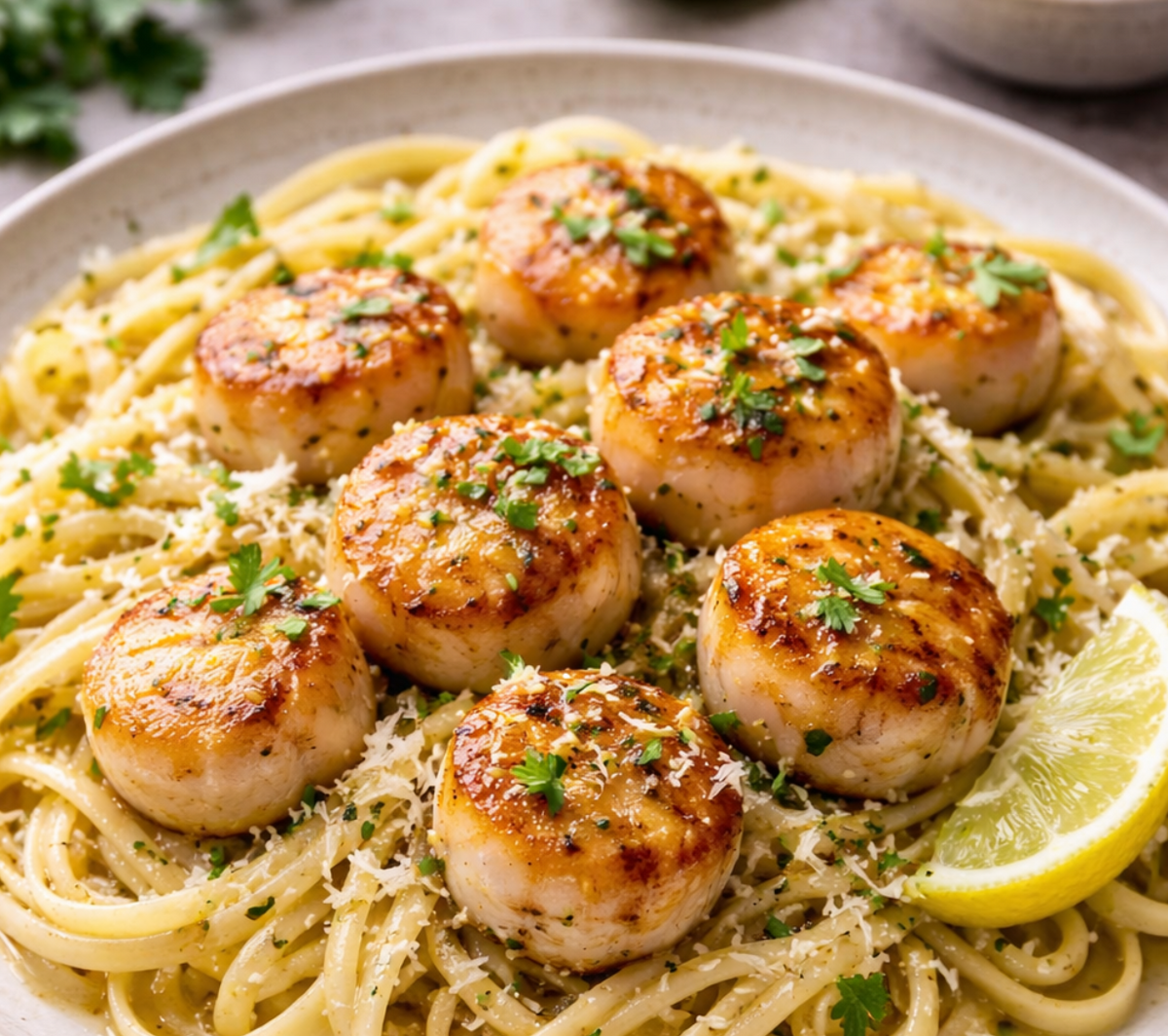
Pan-Seared Scallops with White Balsamic Butter Pasta
Pan-Seared Scallops with White Balsamic Butter Pasta
Description
Golden pan-seared scallops served over silky pasta coated in a light Classic White Balsamic sauce with Butter Flavored Olive Oil, shallot, garlic, and fresh parsley. Rich enough to feel special but bright and balanced enough to let the delicate scallops remain the star.
Recipe Overview
Servings: 2–3
Prep Time: 10 minutes
Cook Time: 15–20 minutes
Total Time: About 30 minutes
Ingredients
12 ounces linguine or fettuccine
1 pound large dry sea scallops, side muscles removed if attached
¾ teaspoon kosher salt, plus more for pasta water
½ teaspoon freshly ground black pepper
3 tablespoons Butter Flavored Olive Oil, divided
2 tablespoons finely minced shallot
2 garlic cloves, finely minced
¼ cup 25 Star White Balsamic, divided
¾ cup reserved pasta water, plus more as needed
2 tablespoons finely chopped fresh parsley
1 teaspoon finely grated lemon zest, optional
Freshly grated Parmesan, optional
Instructions
• Bring a large pot of generously salted water to a boil. Cook the pasta until al dente according to package directions. Before draining, reserve at least ¾ cup of the starchy pasta water.
• While the pasta cooks, remove the small side muscle from each scallop if still attached. Pat the scallops extremely dry with paper towels, then season both sides with kosher salt and black pepper.
• Heat 1½ tablespoons Butter Flavored Olive Oil in a large stainless-steel or cast-iron skillet over medium-high to high heat until shimmering.
• Arrange the scallops in a single layer with plenty of space between them. Work in batches if necessary rather than crowding the skillet.
• Sear the scallops without moving them until the first side develops a deep golden crust and releases readily from the pan, about 2–3 minutes depending on size.
• Flip and cook the second side just until the scallops reach 145°F in the center, generally another 1–2 minutes depending on thickness. Transfer immediately to a clean plate. Do not return them to the skillet while building the pasta sauce.
• Reduce the skillet heat to medium. Add another ½ tablespoon Butter Flavored Olive Oil along with the shallot. Cook for about 1 minute until softened, then add the garlic and cook for about 30 seconds, just until fragrant.
• Add 3 tablespoons 25 Star White Balsamic and ¼ cup reserved pasta water. Scrape the skillet gently to dissolve the flavorful golden fond left from the scallops. Simmer for about 30–60 seconds; do not reduce the balsamic into a thick glaze.
• Add the drained pasta to the skillet with another ¼ cup pasta water. Toss vigorously over medium-low heat until the pasta is glossy and lightly coated, adding additional pasta water a tablespoon or two at a time as needed.
• Remove the skillet from the heat. Add the remaining 1 tablespoon 25 Star White Balsamic, remaining 1 tablespoon Butter Flavored Olive Oil, parsley, and lemon zest if using. Toss vigorously again until the sauce is silky and clings lightly to the pasta. Taste and adjust salt and pepper if needed.
• Divide the pasta among warm plates or shallow bowls and arrange the seared scallops on top rather than mixing them back into the wet pasta sauce. Spoon any juices accumulated on the scallop plate lightly around the pasta.
• Finish with additional parsley and, if desired, a modest amount of freshly grated Parmesan. Serve immediately.
Chef’s Tip
The secret to deeply browned scallops is removing surface moisture and resisting the urge to move them. Use dry-packed scallops when possible, pat them thoroughly dry, give them plenty of room in a properly heated skillet, and wait until the crust naturally releases before flipping.
Flavor Variations
• Lemon White Balsamic creates an even brighter citrus finish that pairs naturally with scallops and fresh parsley.
• Coconut White Balsamic adds a subtle tropical direction; pair it with scallops or shrimp and omit the Parmesan.
• Add baby spinach to the pasta during the final minute of tossing so it wilts gently into the sauce.
• Add roasted or sautéed asparagus for a fresh spring variation.
• Replace the scallops with shrimp, adjusting cooking time as needed and cooking the shellfish to 145°F.
Pairings
Serve with roasted asparagus, sautéed spinach, grilled zucchini, broccolini, or a crisp arugula salad. A simple green vegetable works especially well because the pasta and scallops already provide richness.
Build Your Plate
Turn these white balsamic scallops and pasta into a complete meal
Keep the rest of the plate simple and fresh so the golden scallops and silky white balsamic pasta remain the centerpiece.
Finished Meal
Pan-Seared Scallops with White Balsamic Butter Pasta, roasted asparagus, and a crisp arugula salad
Protein
Golden pan-seared sea scallops with a deeply caramelized crust and tender center
Vegetables & Sides
Roasted asparagus, sautéed spinach, grilled zucchini, broccolini, or a simple arugula salad
Flavor Pairing
25 Star White Balsamic and Butter Flavored Olive Oil with shallot, garlic, parsley, and optional fresh lemon zest
Recipe Notes
Dry-packed scallops are strongly preferred for searing. Scallops treated with added phosphate solution retain more water, which makes it considerably harder to develop a deep golden crust. Regardless of the type purchased, pat the scallops thoroughly dry before seasoning and cooking.
The original recipe used ⅓ cup white balsamic and reduced it directly in the skillet. This version uses ¼ cup divided between the cooked sauce and an off-heat finish. Briefly cooking most of the balsamic integrates it with the scallop fond, shallot, and garlic, while the final tablespoon restores a fresher sweet-tart character without turning the sauce into a concentrated glaze.
Reserved pasta water is essential to the sauce. Its starch helps the Butter Flavored Olive Oil, balsamic, and cooking liquid emulsify into a glossy coating rather than separating or pooling at the bottom of the plate.
Keep the scallops out of the skillet once they are properly cooked. Returning them to the pasta sauce would expose them to additional heat and moisture, risking both overcooking and loss of the crust created during searing.
USDA recommends cooking fish and shellfish to 145°F. Because large scallops vary in thickness, use an instant-read thermometer when possible rather than relying solely on cooking time.


