

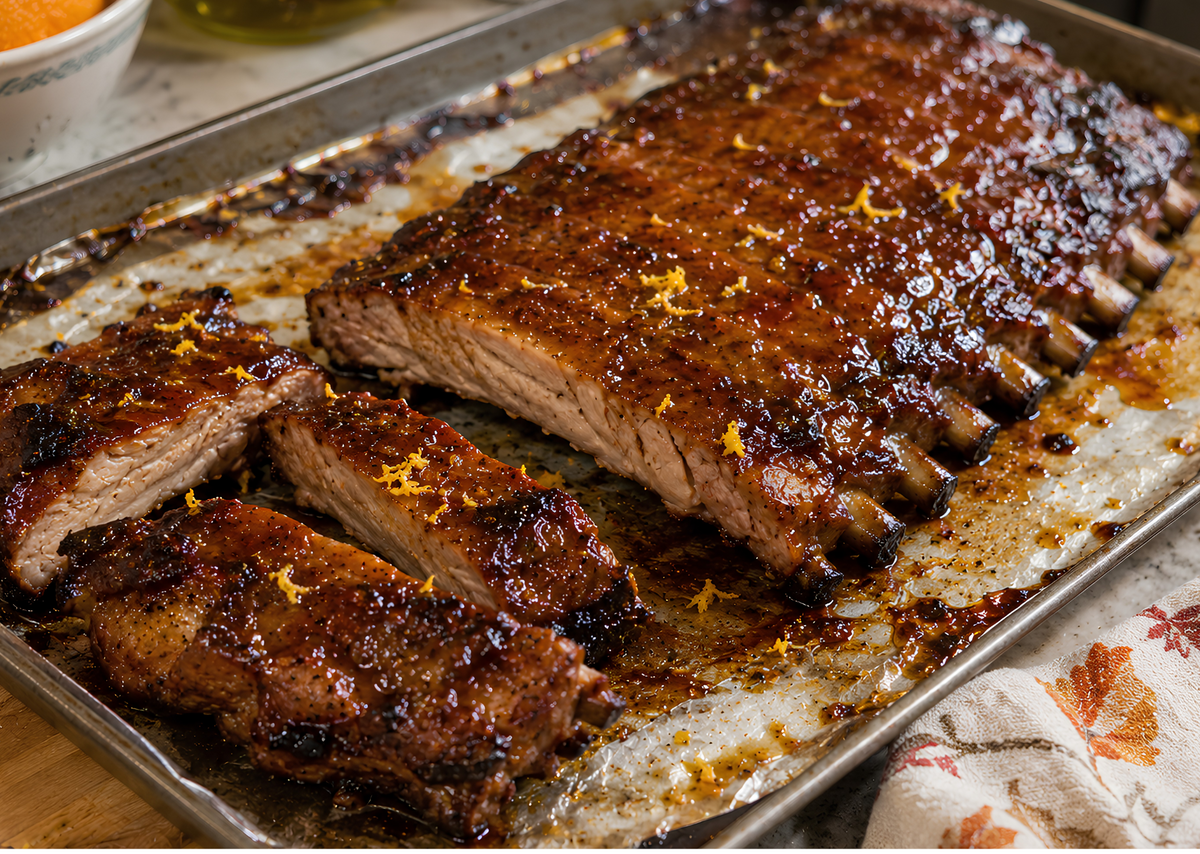
Peach Balsamic Baby Back Ribs with Honey & Citrus
Peach Balsamic Baby Back Ribs with Meyer Lemon Glaze
Description
Tender baby back ribs are roasted low and slow with Meyer Lemon Olive Oil, then brushed with a glossy Peach White Balsamic glaze with honey, Dijon, garlic, and citrus. A brief high-heat finish makes the glaze shiny, lightly caramelized, and sweet-savory while preserving the bright peach and citrus flavors.
Recipe Overview
Servings: 4–6
Prep Time: 20 minutes
Cook Time: 2½–3 hours
Rest Time: 5–10 minutes
Total Time: About 3–3½ hours
Ingredients
1 rack baby back ribs, about 2½–3 pounds
1 tablespoon Meyer Lemon Olive Oil
1½ teaspoons kosher salt
1 teaspoon freshly ground black pepper
1 teaspoon smoked paprika
1 teaspoon garlic powder
½ teaspoon onion powder
¼ teaspoon ground mustard
For the Peach Balsamic Glaze:
⅓ cup plus 2 teaspoons Peach White Balsamic, divided
¼ cup apple juice or low-sodium chicken broth
1 tablespoon honey
1 teaspoon Dijon mustard
1 small garlic clove, finely grated or minced
1 teaspoon orange zest
1 tablespoon fresh orange juice
1 tablespoon cold butter
Instructions
• Preheat the oven to 300°F. Line a rimmed baking sheet with foil.
• Remove the thin membrane from the back of the ribs, then pat the ribs dry with paper towels.
• Rub both sides of the ribs with Meyer Lemon Olive Oil.
• In a small bowl, combine the kosher salt, black pepper, smoked paprika, garlic powder, onion powder, and ground mustard.
• Season both sides of the ribs evenly with the spice mixture.
• Place the ribs meat-side up on the prepared baking sheet and wrap tightly with foil.
• Roast for 2½–3 hours, until the ribs are very tender, the meat has pulled back slightly from the ends of the bones, and the rack bends easily when lifted. Cooking time will vary with the thickness of the rack, so use tenderness rather than the clock alone to determine when the ribs are ready for glazing.
• While the ribs cook, prepare the glaze. In a small saucepan, combine ⅓ cup Peach White Balsamic, apple juice or chicken broth, honey, Dijon mustard, garlic, orange zest, and orange juice.
• Bring to a gentle simmer over medium heat and cook for 6–8 minutes, stirring often, until the glaze has reduced slightly and is glossy and spoonable. Do not reduce it into a thick syrup.
• Remove the saucepan from the heat and whisk in the cold butter until the glaze is smooth and glossy. Reserve the remaining 2 teaspoons Peach White Balsamic for finishing.
• Carefully unwrap the ribs. If a large amount of liquid has collected in the foil, carefully drain or discard the excess so the glaze can adhere to the surface of the ribs.
• Brush the ribs generously with the Peach Balsamic glaze.
• Increase the oven to 450°F or switch to broil. Return the ribs to the oven uncovered for 3–6 minutes, watching closely, until the glaze is bubbling, shiny, and lightly caramelized. If broiling, keep the ribs close enough to caramelize but watch continuously so the balsamic and honey do not burn.
• Remove the ribs from the oven and let them rest for 5–10 minutes before slicing between the bones.
• Finish the ribs with a light drizzle of the remaining 2 teaspoons Peach White Balsamic just before serving.
Chef’s Tip
Glaze the ribs only after they are tender. Peach White Balsamic and honey both contain sugars that can darken quickly, so adding the glaze too early risks scorching it before the ribs are ready. Keep the cooked glaze glossy and spoonable, then use the short high-heat finish only to caramelize the surface.
Flavor Variations
• Pear: Replace Peach White Balsamic with Pear White Balsamic for a softer orchard-fruit glaze that works naturally with the citrus and pork.
• 25 Star White: Replace Peach White Balsamic with 25 Star White Balsamic for a clean, classic sweet-tangy glaze with less pronounced fruit character.
• Fig: Replace Peach White Balsamic with Fig Dark Balsamic for a richer, deeper glaze with more savory body.
• Pomegranate: Replace Peach White Balsamic with Pomegranate Dark Balsamic for a brighter, tangier glaze that cuts through the richness of the ribs.
• Garlic & Roasted Chili: Replace Meyer Lemon Olive Oil with Garlic & Roasted Chili Fused Olive Oil for a warmer, more savory version with roasted garlic and chili character.
Pairings
Serve with creamy coleslaw, grilled corn, roasted potatoes, baked beans, roasted carrots, cornbread, cucumber salad, or a crisp green salad. Chilled Rosé, Zinfandel, dry Riesling, or a citrus-forward wheat beer all pair well with the sweet-savory peach glaze and rich pork.
Build Your Plate
Turn these Peach Balsamic ribs into a complete summer dinner
The ribs are sweet, savory, citrusy, and lightly smoky, so pair them with something crisp, something creamy, and simple sides that let the Peach White Balsamic glaze remain the focus.
Finished Meal
Peach Balsamic Baby Back Ribs with creamy coleslaw, grilled corn, roasted potatoes, and a crisp cucumber salad
Protein
Baby back ribs roasted low and slow until tender, then finished with a glossy Peach White Balsamic glaze
Vegetables & Sides
Creamy coleslaw, grilled corn, roasted potatoes, baked beans, roasted carrots, cornbread, cucumber salad, or crisp greens
Flavor Pairing
Peach White Balsamic brings bright fruit and balanced acidity while Meyer Lemon Olive Oil adds a clean citrus note beneath the sweet-savory glaze
Recipe Notes
Baby back ribs are best judged by tenderness rather than cooking time alone. Look for the meat to pull back slightly from the ends of the bones and for the rack to bend easily when lifted. The 2½–3 hour roasting window is a guide; thicker racks may need a little longer.
The Peach White Balsamic is intentionally divided. The ⅓ cup portion is simmered with the apple juice or broth, honey, Dijon, garlic, orange zest, and orange juice to build the cooked glaze. The remaining 2 teaspoons are reserved for a light fresh finish after the ribs have rested.
Do not reduce the glaze into a thick syrup before brushing it onto the ribs. It should remain loose enough to spread easily because it will continue to concentrate and caramelize during the final high-heat finish.
The ribs can be roasted ahead, cooled, and refrigerated before glazing. Reheat them covered in a low oven until warmed through, then brush with the glaze and complete the high-heat finishing step just before serving.
Leftover ribs may be refrigerated for up to 3 days and reheat best when covered so the meat stays moist.


