

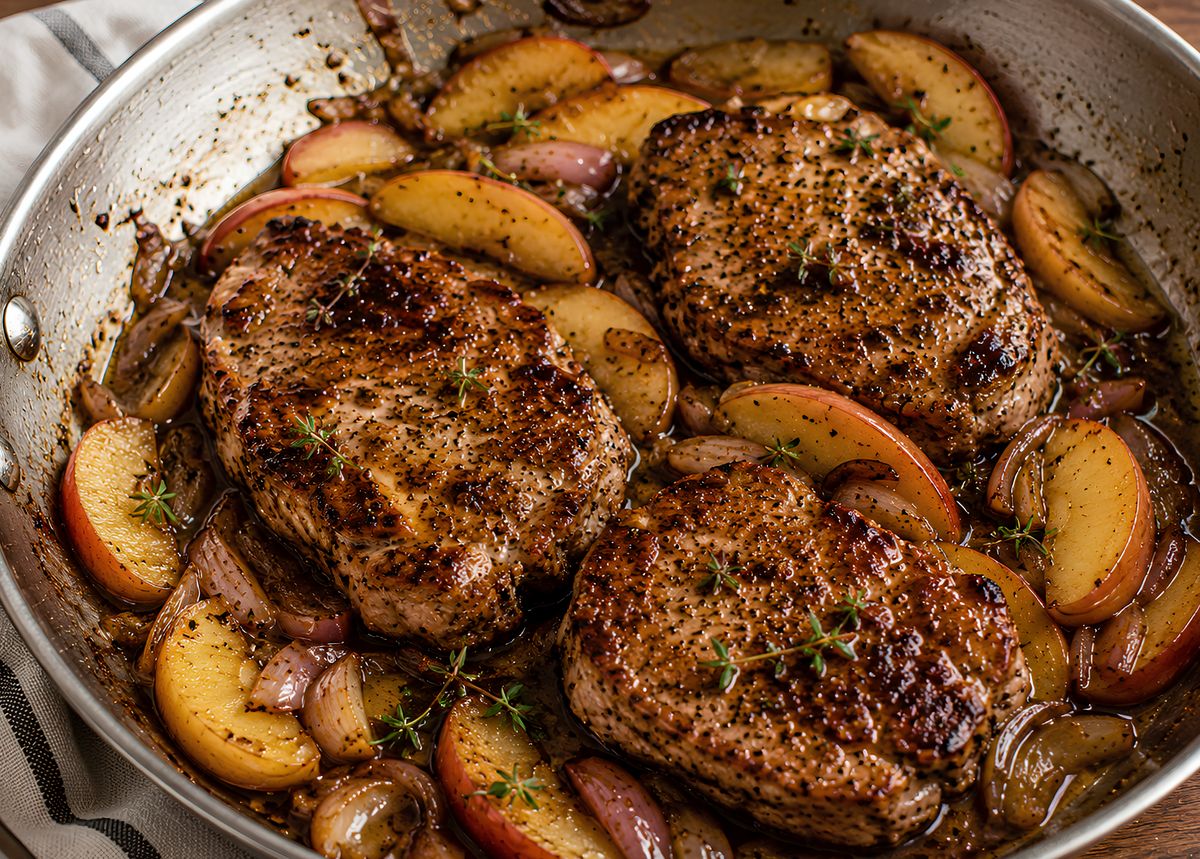
Pear Balsamic Pork Shoulder Steaks with Apple & Shallot Pan Sauce
Pear Balsamic Pork Shoulder Steaks with Apple & Shallot Pan Sauce
Description
Rich pork shoulder steaks are deeply seared, then gently finished in a skillet with Pear White Balsamic, caramelized shallots, thyme, and savory pan juices. Tender browned apples are returned at the end, while Blood Orange Olive Oil adds a bright citrus note that balances the richness of the pork.
Recipe Overview
Servings: 2–4
Prep Time: 15 minutes
Cook Time: About 35–45 minutes
Rest Time: At least 3 minutes
Total Time: About 55–65 minutes
Ingredients
2 pork shoulder steaks, ¾–1 inch thick, about 1½ pounds total
Kosher salt and freshly ground black pepper
1 tablespoon Blood Orange Olive Oil
1 large firm apple, such as Honeycrisp, Pink Lady, or Granny Smith, cored and sliced into ½-inch wedges
1 large shallot, thinly sliced
1 garlic clove, minced
½ cup low-sodium chicken broth, plus more if needed
⅓ cup plus 1 tablespoon plus 1 teaspoon Pear White Balsamic, divided
1 teaspoon Dijon mustard
1 teaspoon chopped fresh thyme, or ½ teaspoon dried thyme
1 tablespoon cold butter
Optional: small pinch red pepper flakes
Instructions
• Pat the pork shoulder steaks dry with paper towels and season both sides generously with kosher salt and black pepper.
• Heat Blood Orange Olive Oil in a large skillet over medium-high heat until shimmering.
• Add the pork shoulder steaks and sear for 3–4 minutes per side, until deeply browned. Transfer the pork to a clean plate.
• Reduce the heat to medium. Add the apple wedges and cook for 2–3 minutes per side, until lightly caramelized but still firm enough to hold their shape. Transfer the apples to a separate plate.
• Add the shallot to the skillet and cook for 2–3 minutes, stirring often, until softened and beginning to caramelize.
• Add the garlic, thyme, and red pepper flakes, if using. Cook for about 30 seconds, just until fragrant.
• Pour in the chicken broth and scrape up the browned bits from the bottom of the skillet.
• Stir in ⅓ cup Pear White Balsamic and the Dijon mustard.
• Return the pork shoulder steaks and any accumulated juices to the skillet. Reduce the heat to medium-low, cover, and maintain a gentle simmer for about 18–25 minutes, turning the steaks once. Begin checking early and add a splash of broth if the liquid reduces too quickly. Cook until the pork reaches at least 145°F and is tender when pierced with a fork. Because shoulder steaks contain more connective tissue than loin or tenderloin, continue the gentle covered cooking if needed for tenderness rather than removing them solely because they have reached the minimum safe temperature.
• Transfer the pork to a clean plate, tent loosely with foil, and let rest for at least 3 minutes.
• Simmer the apple-shallot pan sauce uncovered for 3–5 minutes, until glossy and spoonable. If it becomes too thick, loosen it with a splash of chicken broth.
• Remove the skillet from the heat. Stir in 1 tablespoon Pear White Balsamic and the cold butter until the sauce is smooth and glossy.
• Return the browned apples to the skillet and gently toss them in the sauce just until warmed through.
• Spoon the apples, shallots, and pan sauce over the rested pork shoulder steaks. Finish with the remaining 1 teaspoon Pear White Balsamic just before serving.
Chef’s Tip
Pork shoulder steaks have more connective tissue than pork tenderloin or loin chops, so use both temperature and tenderness to judge when they are ready. They are safe at 145°F followed by a 3-minute rest, but shoulder steaks may benefit from additional gentle cooking until comfortably tender. Keep the skillet at a quiet simmer rather than a hard boil, and add a splash of broth whenever needed so the pork can continue tenderizing without the sauce becoming overly concentrated.
Flavor Variations
• Peach: Replace Pear White Balsamic with Peach White Balsamic for a warm stone-fruit version that works naturally with apple, shallot, and pork.
• Fig: Replace Pear White Balsamic with Fig Dark Balsamic for a deeper fall-style sauce with richer sweetness and a more savory finish.
• Pomegranate: Replace Pear White Balsamic with Pomegranate Dark Balsamic for a brighter, tangier sauce that cuts through the richness of pork shoulder.
• Garlic & Roasted Chili: Replace Blood Orange Olive Oil with Garlic & Roasted Chili Fused Olive Oil for a warmer, more savory version with roasted garlic and chili character.
• Peppery Greens: Add a small handful of fresh arugula to each plate just before serving for a fresh, peppery contrast to the orchard-style sauce.
Pairings
Serve with mashed sweet potatoes, creamy polenta, wild rice, roasted Brussels sprouts, roasted carrots, green beans, or a simple arugula salad. Pinot Blanc, Chardonnay, dry Riesling, or a lighter Pinot Noir all pair well with the pear, apple, shallot, citrus, and pork.
Build Your Plate
Turn these Pear Balsamic pork shoulder steaks into a complete cozy dinner
Pair the rich pork and orchard-style apple-shallot sauce with a creamy starch, roasted vegetables, and something fresh or peppery to balance the plate.
Finished Meal
Pear Balsamic Pork Shoulder Steaks with apple-shallot pan sauce, mashed sweet potatoes, roasted Brussels sprouts, and a simple arugula salad
Protein
Pork shoulder steaks deeply seared and gently finished in the skillet until safely cooked and tender
Vegetables & Sides
Mashed sweet potatoes, creamy polenta, wild rice, roasted Brussels sprouts, roasted carrots, green beans, or a simple arugula salad
Flavor Pairing
Pear White Balsamic brings bright orchard fruit and balanced acidity while Blood Orange Olive Oil adds citrus lift to the rich pork and caramelized apples
Recipe Notes
Choose pork shoulder steaks that are as evenly cut as possible so they cook at approximately the same rate. Begin checking them early, but remember that 145°F is the minimum safe temperature rather than an automatic tenderness endpoint for this particular cut. If a steak has reached 145°F but is still noticeably firm, continue the gentle covered cooking with enough liquid in the skillet to keep the environment moist.
Use a firm apple that will hold its shape during cooking. Cutting the apple into approximately ½-inch wedges and browning it separately prevents the fruit from breaking down during the longer covered cooking required by the pork shoulder. Return the apples only after the sauce is finished so they remain tender but distinct.
The Pear White Balsamic is intentionally divided: ⅓ cup goes into the simmering pan sauce, 1 tablespoon is stirred in off heat with the cold butter, and the final 1 teaspoon is reserved for a fresh finishing drizzle. Every portion is accounted for.
If the sauce reduces before the pork becomes tender, add chicken broth a little at a time and continue cooking gently. The finished sauce should be glossy and spoonable rather than thick or sticky.
Leftovers may be refrigerated for up to 3 days and reheat best over low heat with a splash of broth to keep the pork and sauce moist.


